Last Updated on June 1, 2025 by Nico
Making your own DIY plantain oil is a simple way to preserve and access the soothing benefits of the plant. Plantain-infused oil is wonderful for calming skin irritations, soothing insect bites, and healing minor cuts more quickly.

Plantain (Plantago major and Plantago lanceolata) is one of those wild plants that many people consider a weed. Dandelions are another one, but they make one of my absolute favourite tinctures and salve!
Plantain grows easily in yards, sidewalks, and open fields. Despite it being often dismissed as a week, it is actually a powerful medicinal plant that Native Americans and herbalists have used for centuries.
Plantain-infused oil is an excellent way to be able to preserve and access the benefits of the plant, like for bug bites, poison ivy rashes, and minor cuts.

Benefits of plantain
Soothes skin irritations – Plantain leaves contain allantoin, a natural compound that reduces inflammation and helps to repair minor skin irritations.
Relieves insect bites – The antihistamine properties in plantain help calm itching and swelling from bug bites and stings.
Supports wound healing – Plantain is packed with antimicrobial and anti-inflammatory compounds, and applying this oil topically to minor cuts and scrapes can help to speed up the recovery process.
Where to find plantain
Plantain grows in like crazy in open fields, yards, and alongside walks. If you plan to forage plantain leaves to make this oil, make sure that you find plants that have not been sprayed with poisonous herbicides or pesticides. The chemicals may still be on the leaves of the plant and you don’t want those poisons in your infused oil.
Because plantain is conventionally considered a weed, the plants growing near public walkways are likely to have been sprayed. Look instead in a more remote spot to source your leaves.
Fresh or dried plantain
Once you have foraged your leaves, rinse them and lay them flat on a towel or cookie sheet to dry. You can use a salad spinner at the start to speed up the drying process. I like air drying plants because it doesn’t reduce the nutrients in the plant.
You want to make sure to use dried plant material when making infused oils because if there’s too much water content in the materials, it’ll cause the oil to go rancid more quickly. I’ve bought dried plantain online before, and here’s the source I used.

How to make plantain oil
Tools
- A clean glass jar with a lid – I like these mason jars
- Cheesecloth or fine mesh strainer for straining off the oil – Here is a source for extra large unbleached cheesecloth
- A warm, sunny spot for infusing
Supplies
- Dried plantain leaves – I’ve used this source
- Organic olive oil, sweet almond oil, or fractionated coconut oil as your base oil
- A glass jar for storing the final infused oil
How to make plantain oil
If using fresh leaves, rinse them off and let them air dry on paper towels to remove moisture. If you’re using dried leaves, you can skip this step.
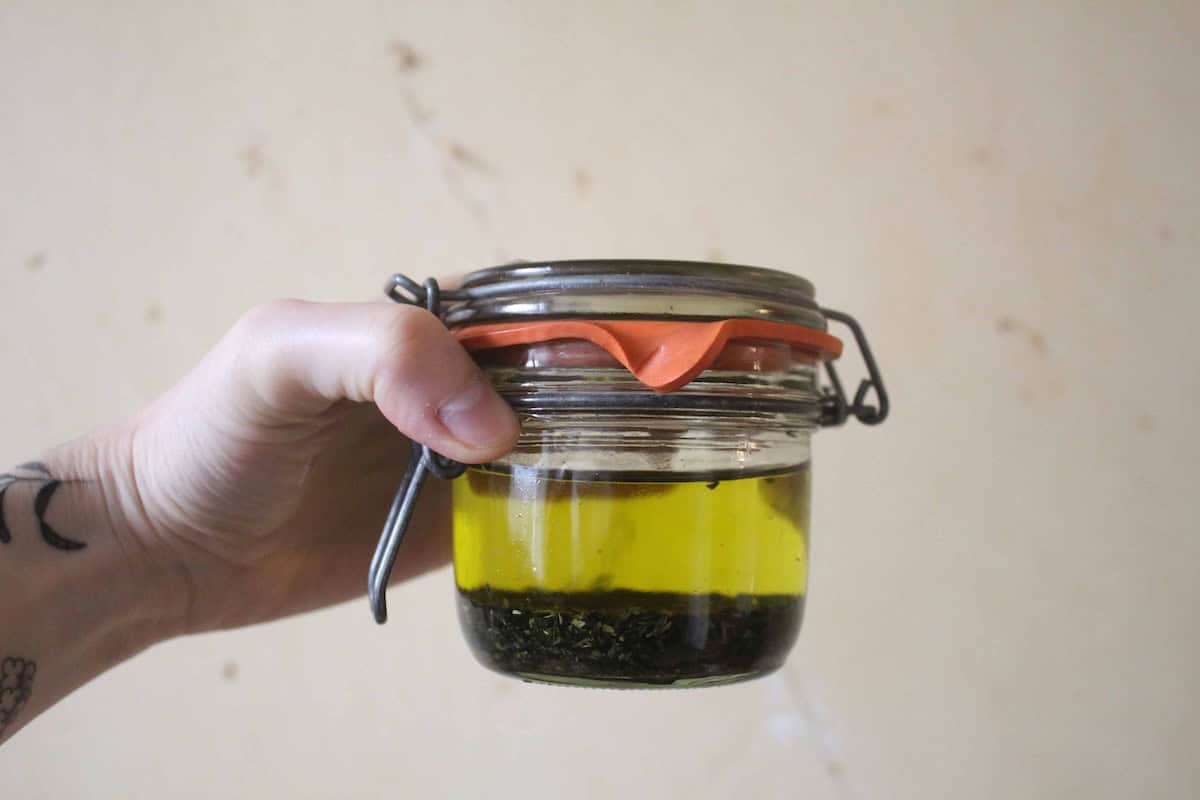
Chop the leaves and pack them into the jar, but don’t overfill it. You need space for the oil to fully cover them. I usually fill my jar about ¾ full, to allow room for the leaves to expand as they absorb the oil.

Cover the leaves with your oil. You can use a high quality olive oil, fractionated coconut oil (the kind that stays liquid) or sweet almond oil. Use enough oil to make sure all the leaves are completely submerged.

Place the jar in a warm, sunny spot for 4-6 weeks. In the first few days of the infusion, check the jar a few times a day and top up the oil as needed. It’s common for the leaves to peek out from the oil as they absorb some of it. Keep them submerged by simply topping up the oil.
After the first few days, you won’t need to keep topping up the oil. Aim to shake it every day or so.

After 6 weeks, use cheesecloth or a fine mesh strainer to strain off the plantain leaves. You can also use a coffee filter, which will provide a very fine strainer, but will take a long time.
Add the infused oil to a glass jar and that’s it! Make sure to label it so you don’t forget what it is.

How to use plantain oil
- Externally – This oil is for external use only.
- Directly – I like to apply some directly to bug bites, itchy rashes, mild cuts, mild external allergic symptoms, and other skin issues. You can apply it as needed!
- Massage oil – Because this is a healing oil, it works well as a soothing body oil, especially for tired hands and feet that need extra attention.
- Make a healing salve – Here’s how to make a healing plantain salve using this infused oil!
How to store plantain oil
It’s best to store infused oils in a cool, dark place to extend their shelf life. I keep my oils in our pantry and kitchen cupboards.
Disclaimer – I’m not a medical professional and do not intend to offer medical or health advice in any content I create. I offer information for educational purposes and, as always, get your physician’s advice or the advice of your health care provider before trying a new herbal remedy. There are always possible unintended consequences of trying a new herbal remedy such as an allergic reaction or unexpected side effects like interactions with other medication or an existing health condition.
Save for later

This post may contain affiliate links, which means I make a small commission at no extra cost to you. As an Amazon Associate, I earn from qualifying purchases.
Find us elsewhere…
If you make this how-to and enjoy it, please consider giving it 5 stars. Find me on Instagram @documentingsimpleliving and show me what you’ve made!
The Easiest DIY Plantain Infused Oil
Ingredients
Equipment
Method
- If using fresh leaves, rinse them off and let them air dry on paper towels to remove moisture. If you're using dried leaves, you can skip this step.
- Chop the leaves and pack them into the jar, but don’t overfill it. You need space for the oil to fully cover them. I usually fill my jar about ¾ full, to allow room for the leaves to expand as they absorb the oil.
- Cover the leaves with your oil. You can use a high quality olive oil, fractionated coconut oil (the kind that stays liquid) or sweet almond oil. Use enough oil to make sure all the leaves are completely submerged.
- Place the jar in a warm, sunny spot for 4-6 weeks. In the first few days of the infusion, check the jar a few times a day and top up the oil as needed. It’s common for the leaves to peek out from the oil as they absorb some of it. Keep them submerged by simply topping up the oil.
- After the first few days, you won’t need to keep topping up the oil. Aim to shake it every day or so.
- After 6 weeks, use cheesecloth or a fine mesh strainer to strain off the plantain leaves. You can also use a coffee filter, which will provide a very fine strainer, but will take a long time.
- Add the infused oil to a glass jar and that’s it! Make sure to label it so you don’t forget what it is.
Video
Notes
How to use plantain oil
- Externally – This oil is for external use only.
- Directly – I like to apply some directly to bug bites, itchy rashes, mild cuts, mild external allergic symptoms, and other skin issues. You can apply it as needed!
- Massage oil – Because this is a healing oil, it works well as a soothing body oil, especially for tired hands and feet that need extra attention.
- Make a healing salve – Here’s how to make a healing plantain salve using this infused oil!
Leave a Reply