Last Updated on June 1, 2025 by Nico
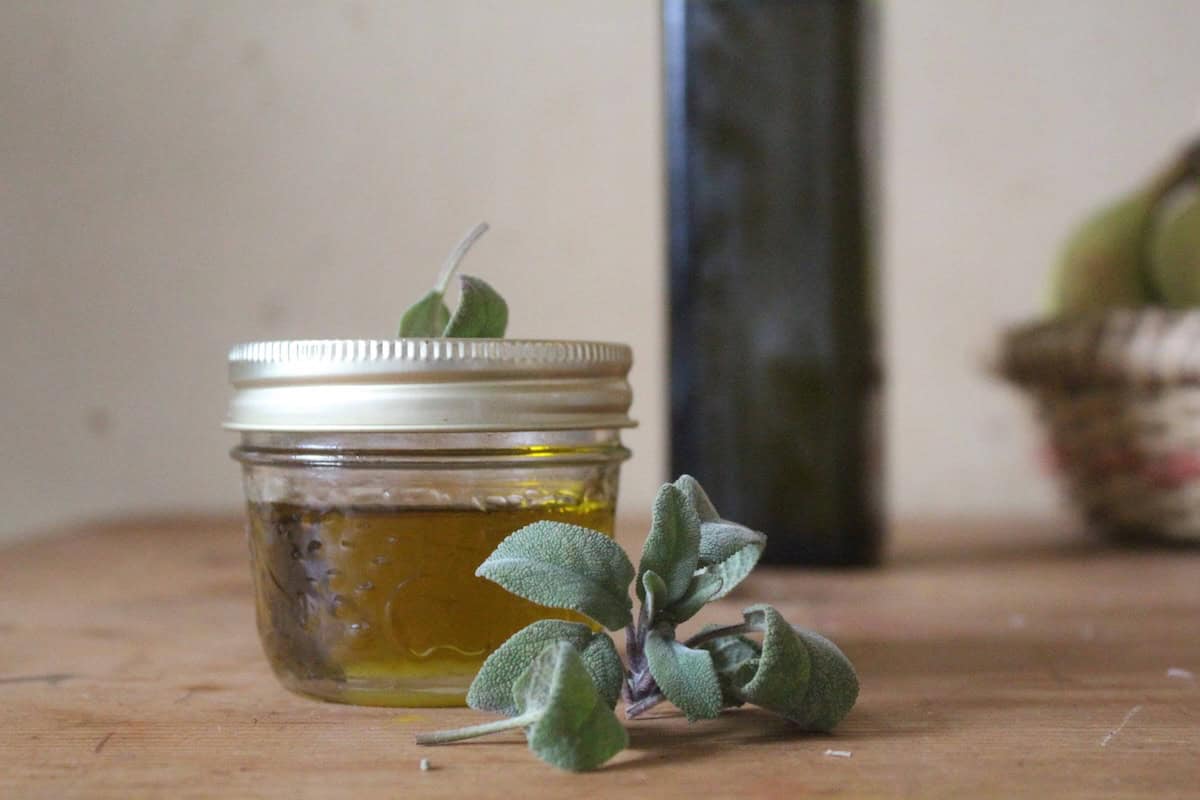
Ready in under 1 hour, sage-infused olive oil is a simple way to elevate your cooking. This infusion adds the delicious flavour of sage when it’s drizzled over pasta dishes, used as a base for a summer vinaigrette, or blended into a cream of mushroom soup.

Why make sage olive oil
Sage is rich in health benefits, including anti-inflammatory and antioxidant properties. When it’s infused in high-quality olive oil, it has a deep, earthy flavour that adds a lovely depth to dishes. Olive oil and sage make an absolutely delicious combination!
Where to source your ingredients
I like to use olive oil to make this infused oil. It’s best to source a cold-pressed, unrefined high quality olive oil to make your infused with. Avoid using refined oils like canola oil because they lack nourishing nutrients and can cause inflammation.

Fresh or dried sage
It’s best to use slightly wilted fresh sage to make this infused oil. This is because fresh sage has more flavour than dried sage and when it’s slightly wilted, it has less moisture content. Water in fresh herbs can cause oils to go rancid more quickly, so wilted is the best.
Of course, if you don’t have fresh sage, you can use dried! If you use dried sage, you can infuse the oil for longer to get as much flavour out of it and into the oil.

How to make sage infused oil
Ingredients
- Certified extra virgin olive oil (or avocado oil for a lighter flavour) – I use this bulk source of cold pressed olive oil and this avocado oil.
- Fresh sage leaves
Tools
- 1 medium sauce pot
- 1 wide-mouthed glass jar or glass bottles for storage – I like these
- 1 double boiler (optional)
- Cheesecloth – Here is a source for extra large unbleached cheesecloth
Fast infusion instructions
Rinse and pat dry your fresh sage. Make sure they are free from dirt and excess moisture.

Add the sage to a medium saucepan and cover it with your oil. Heat the mixture gently until the oil is warm.

Let the sage leaves infuse in the warm oil for 20 minutes on a medium heat. You will begin to smell the sage.

After 20 minutes, remove the saucepan from the heat and let the mixture cool to room temperature.
Strain the sage from the oil using a fine mesh strainer or cheesecloth.

Add the infused oil to a glass jar or bottle. Store in the fridge and use within two weeks.
Slow infusion instructions
Rinse and pat dry your fresh sage. Make sure they are free from dirt and excess moisture.
Add the fresh sage leaves into a glass jar and cover the leaves with an extra virgin olive oil. Let it sit in a dark place for 2-4 weeks, shaking the jar every few days. After the infusion period, strain and store as usual.

How to store sage-infused oil
Store your sage-infused olive oil in a glass bottle or wide-mouthed glass jar in a dark place, such as a pantry or cupboard, away from direct sunlight. For the best preservation, keep it in the refrigerator, where it can last for up to 2 months. If stored at room temperature, use it within 2 weeks to ensure freshness and avoid spoilage. Always check for any off smells or cloudiness before use.
How to use sage infused olive oil
- Medicinal applications – Use as a base for salves or balms. Sage oil benefits include anti-inflammatory properties, making it great for sore muscles and skin nourishment.
- Cooking – Drizzle it over pasta dishes.
- Salads – Mix it with a Sicilian lemon white balsamic vinegar or other vinegar for a delicious salad dressing!
- Enhance soups – For example, stir it into a cream of mushroom soup!
- Bread dipping – Pair the oil with an array of savory wild mushrooms and other fresh herbs for a (very) tasty bread dip!
Save for later

This post may contain affiliate links, which means I make a small commission at no extra cost to you. As an Amazon Associate, I earn from qualifying purchases.
Find us elsewhere…
If you make this how-to and enjoy it, please consider giving it 5 stars. Find me on Instagram @documentingsimpleliving and show me what you’ve made!
The Easiest Sage Infused Olive Oil
Ingredients
Equipment
Method
- Rinse and pat dry your fresh sage. Make sure they are free from dirt and excess moisture.
- Add the sage to a medium saucepan and cover it with your oil. Heat the mixture gently until the oil is warm.
- Let the sage leaves infuse in the warm oil for 20 minutes on a medium heat. You will begin to smell the sage.
- After 20 minutes, remove the saucepan from the heat and let the mixture cool to room temperature.
- Strain the sage from the oil using a fine mesh strainer or cheesecloth.
- Add the infused oil to a glass jar or bottle. Store in the fridge and use within two weeks.
- Rinse and pat dry your fresh sage. Make sure they are free from dirt and excess moisture.
- Add the fresh sage leaves into a glass jar and cover the leaves with an extra virgin olive oil. Let it sit in a dark place for 2-4 weeks, shaking the jar every few days. After the infusion period, strain and store as usual.
Leave a Reply