Last Updated on September 14, 2025 by Nico
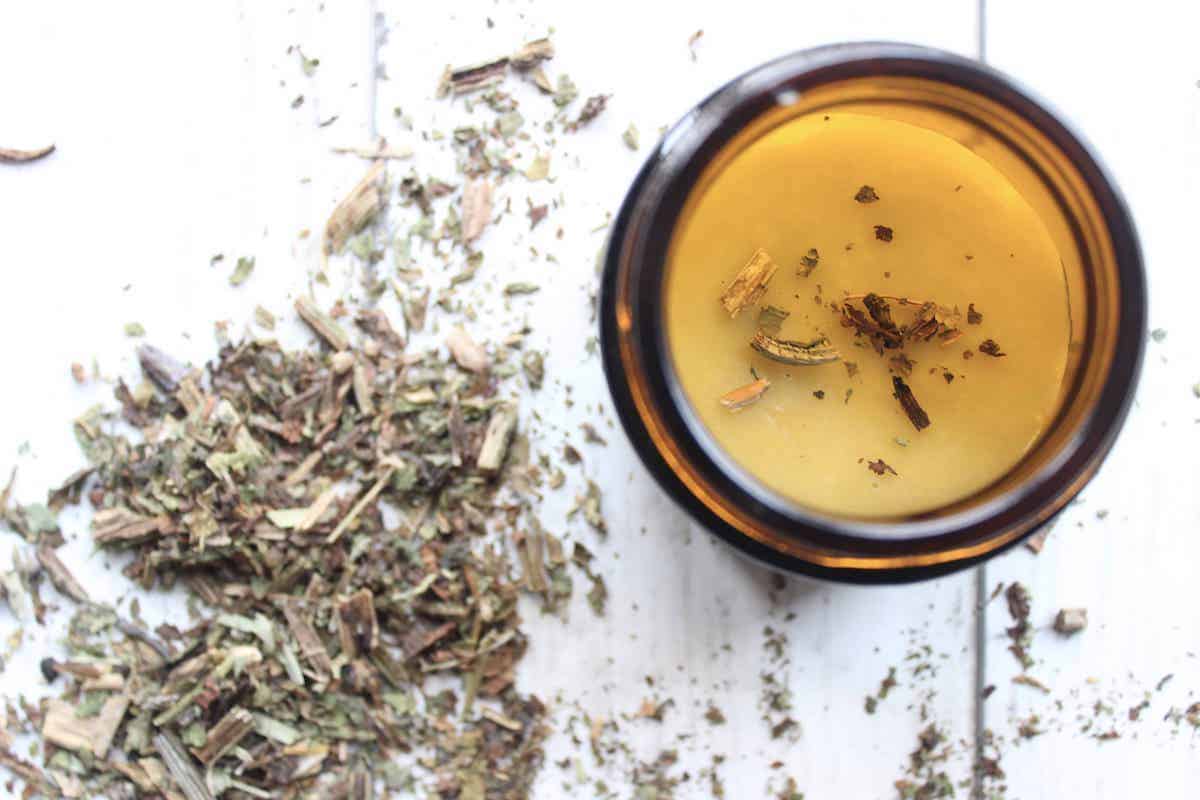
This comfrey salve recipe makes a great addition to your herbal medicine cabinet. This herbal salve uses only a handful of simple ingredients and helps to heal minor wounds and skin irritations.

Like other medicinal plants, the comfrey plant (Symphytum officinale) has been used for centuries in traditional medicine. It has lance-shaped leaves and was historically called “knitbone” due to its healing properties and was used to help with bone and tissue healing. It was used by traditional herbalists in Europe, Asia, and the Americas to soothe skin issues, minor wounds, and joint discomfort.
Why make comfrey salve?
DIY comfrey ointment is a good remedy to have on hand to help support skin and joint health. It is applied topically and can help to address minor bruises, sprains, and dry, irritated skin.
Comfrey also has anti-inflammatory compounds, such as allantoin and rosmarinic acid, that help soothe and support the skin, and this comfrey salve recipe makes it easy for you to be able to access these benefits.
Watch the video
Benefits of comfrey
Promotes skin healing – Comfrey contains allantoin, which is a compound that stimulates cell growth in our bodies. This can help to repair minor cuts and skin irritations.
Reduces inflammation – The rosmarinic acid in comfrey has natural anti-inflammatory properties, which can help to reduce joint pain, including pain from arthritic joints.
Helps with minor pains – Comfrey can help reduce mild pain (like mild back pain) when applied topically.
Helps with recovery from bruises and sprains – Comfrey can also help reduce swelling and provide pain relief from minor bruises and sprains.

Simple comfrey salve recipe
Tools
An airtight container with a tight-fitting lid – I use a glass pint jar (these ones) but you can also use a quart jar if you want to make a larger batch
A fine mesh strainer, cheesecloth, or coffee filter – I like these unbleached ones
Double boiler (or a small saucepan with a glass bowl on top) – Make sure to use a glass bowl that you don’t mind getting permanently covered with beeswax. It’s hard to completely remove beeswax from glass! I save one bowl that I use for all of my homemade remedies that use beeswax.
Supplies
Dried comfrey leaf – Here’s an organic source
Carrier oil – You can use jojoba oil, avocado oil, cold-pressed olive oil, fractionated coconut oil, or another neutral oil)
Beeswax pastilles or pellets – I used these
Optional – Vitamin e oil or essential oils (like lavender or tea tree oil) for added scent and skin benefits
For complete measurements, see the printable recipe card below.
Instructions
This recipe uses beeswax with is very difficult to remove once it’s melted onto a surface. Make sure to use tools that you don’t mind having beeswax on. I have a dedicated bowl, whisk, jar, etc that I use for my beeswax goodies!

Add the dried comfrey leaves to a clean glass jar and cover it with the carrier oil. I used jojoba oil, but you could also use fractionated coconut oil or cold-pressed olive oil. Make sure all of the plant material is covered in oil.

Add a lid and set in a sunny spot for 6 weeks. Aim to shake the jar every few days to keep all of the comfrey submerged in oil. This is all you need to do to make the comfrey leaf-infused oil that we’ll use in the salve.

If you don’t want to wait 6 weeks, you can also infuse the oil on the stovetop. To do this, add the carrier oil and dried comfrey leaves to a double boiler and turn the stovetop onto its lowest setting. You want to slowly warm the carrier oil to extract the comfrey oil from the leaves but it’s important not to boil or burn the oil so make sure to keep it on a very low heat. After a few hours of slowly heating the oil, continue on to follow the instructions below. You could also use a crock pot to do this if you do not want to monitor the heat so closely.
Use a strainer or fine-mesh cheesecloth to strain off the comfrey leaves from the oil. Make sure to squeeze as much oil from the plant material as you can!

Add the beeswax pellets to the double boiler. If you don’t have one, you can create one by setting a small glass bowl onto a saucepan!
Add the strained, comfrey-infused oil to the beeswax pellets and slowly melt together over a low heat.

Once completely melted and combined, turn off the heat and add up to 10 drops of essential oils to the mixture. I like adding 10 drops of lavender oil for the smell, and about 5 drops of tea tree oil for added skin healing benefits. You can also add a few drops of vitamin E oil to help the salve last a bit longer and for antioxidant effects.
Use a small whisk and begin to whip the mixture. Again, make sure to use a whisk that you don’t mind getting beeswax on because it’s hard to completely remove it!

Use your hands to add the mixture into a clean storage jar and let it cool completely before adding a lid. That’s it! I hope this gives you the confidence to make your own homemade comfrey salve.

How much comfrey salve to use?
A little bit goes a long way. For minor bruises, skin irritation, or insect bites, clean the area prior to putting it on. Then rub a small amount over the area – you can use it 2 times per day.
How long does homemade comfrey salve last?
The salve should last several months if stored in a room temperature, dark place (like a cupboard or pantry).
How to use comfrey extract salve
- Apply externally to minor burns, bug bites, or sprains to help soothe inflammation and discomfort.
- Massage gently onto sore joints to support recovery and reduce swelling.
- Use on irritated or dry skin as a natural and soothing moisturiser.
Warnings
- Comfrey, in particular comfrey roots, contain pyrrolizidine alkaloids (PAs) which are naturally occurring compounds found in some plants. PAs pose a risk because they can be toxic to the liver if absorbed into the bloodstream, especially over prolonged use or through broken skin. For that reason make sure to not use this salve on broken skin or internally.
- Topical application only – Comfrey cream is for external use only. It should not be ingested or applied to deep cuts or open wounds due to compounds in the plant that can be toxic to the liver.
- Limit application areas – Make sure to apply it only to unbroken skin and avoid long-term use.
Disclaimer – I’m not a medical professional and do not intend to offer medical or health advice in any content I create. I offer information for educational purposes and, as always, get your physician’s advice or the advice of your health care provider before trying a new herbal remedy. There are always possible unintended consequences of trying a new herbal remedy such as an allergic reaction or unexpected side effects like interactions with other medication.
Get the recipe book: 7+ Tinctures For Winter

Save for later

This post may contain affiliate links, which means I make a small commission at no extra cost to you. As an Amazon Associate, I earn from qualifying purchases.
Find us elsewhere…
If you make this how-to and enjoy it, please consider giving it 5 stars. Find me on Instagram @documentingsimpleliving and show me what you’ve made!
DIY Homemade Comfrey Salve Recipe (Healing Ointment)
Ingredients
Equipment
Method
- Add the dried comfrey leaves to the glass jar and cover it with the carrier oil. I used jojoba oil, but you could also use fractionated coconut oil or cold-pressed olive oil. Make sure all of the plant material is covered in oil.
- Add a lid and set in a sunny spot for 6 weeks. Aim to shake the jar every few days to keep all of the comfrey submerged in oil. This is all you need to do to make the comfrey leaf-infused oil that we’ll use in the salve.
- If you don’t want to wait 6 weeks, you can also infuse the oil on the stovetop. To do this, add the carrier oil and dried comfrey leaves to a double boiler and turn the stovetop onto its lowest setting. You want to slowly warm the carrier oil to extract the comfrey oil from the leaves but it’s important not to boil or burn the oil so make sure to keep it on a very low heat. After a few hours of slowly heating the oil, continue on to follow the instructions below. You could also use a crock pot to do this if you do not want to monitor the heat so closely.
- Use a strainer or fine-mesh cheesecloth to strain off the comfrey leaves from the oil. Make sure to squeeze as much oil from the plant material as you can!
- Add the beeswax pellets to the double boiler (you can create one by setting a small glass bowl onto a saucepan).
- Add the strained, comfrey-infused oil to the beeswax pellets and slowly melt together over a low heat.
- Once completely melted and combined, turn off the heat and add up to 10 drops of essential oils to the mixture. I like adding 10 drops of lavender oil for the smell, and about 5 drops of tea tree oil for added skin healing benefits. You can also add a few drops of vitamin E oil to help the salve last a bit longer and for antioxidant effects.
- Use a small whisk and begin to whip the mixture. Again, make sure to use a whisk that you don’t mind getting beeswax on because it’s hard to completely remove it!
- Use your hands to add the mixture into a clean storage jar and let it cool completely before adding a lid. That’s it! I hope this gives you the confidence to make your own homemade comfrey salve.
Video
Notes
How much comfrey salve to use?
A little bit goes a long way. For minor bruises, skin irritation, or insect bites, clean the area prior to application and then rub a small amount over the area. You can use it 2 times per day.How long does homemade comfrey salve last?
The salve should last several months if stored in a room temperature, dark place (like a cupboard or pantry).Warnings
- Comfrey, in particular comfrey roots, contain pyrrolizidine alkaloids (PAs) which are naturally occurring compounds found in some plants. PAs pose a risk because they can be toxic to the liver if absorbed into the bloodstream, especially over prolonged use or through broken skin. For that reason make sure to not use this salve on broken skin or internally.
- Topical application only – Comfrey cream is for external use only and should not be ingested or applied to deep cuts or open wounds due to compounds in the plant that can be toxic to the liver.
- Limit application areas – Make sure to apply it only to unbroken skin and avoid long-term use.
I accidentally bought cut and sifted comfrey root. Can I use it for the recipe?
Yep that’ll be fine. Just use doubled over cheesecloth when straining off the oil to fully remove the little pieces 🙂